






Level 3 Award
Emergency First Aid at Work (EFAW)
Assessing an incident, CPR, choking, bleeding and shock, and looking after a casualty until help arrives.
Price on requestEnquire

21 courses in 6 areas. Choose an area for details, or jump straight to a course.
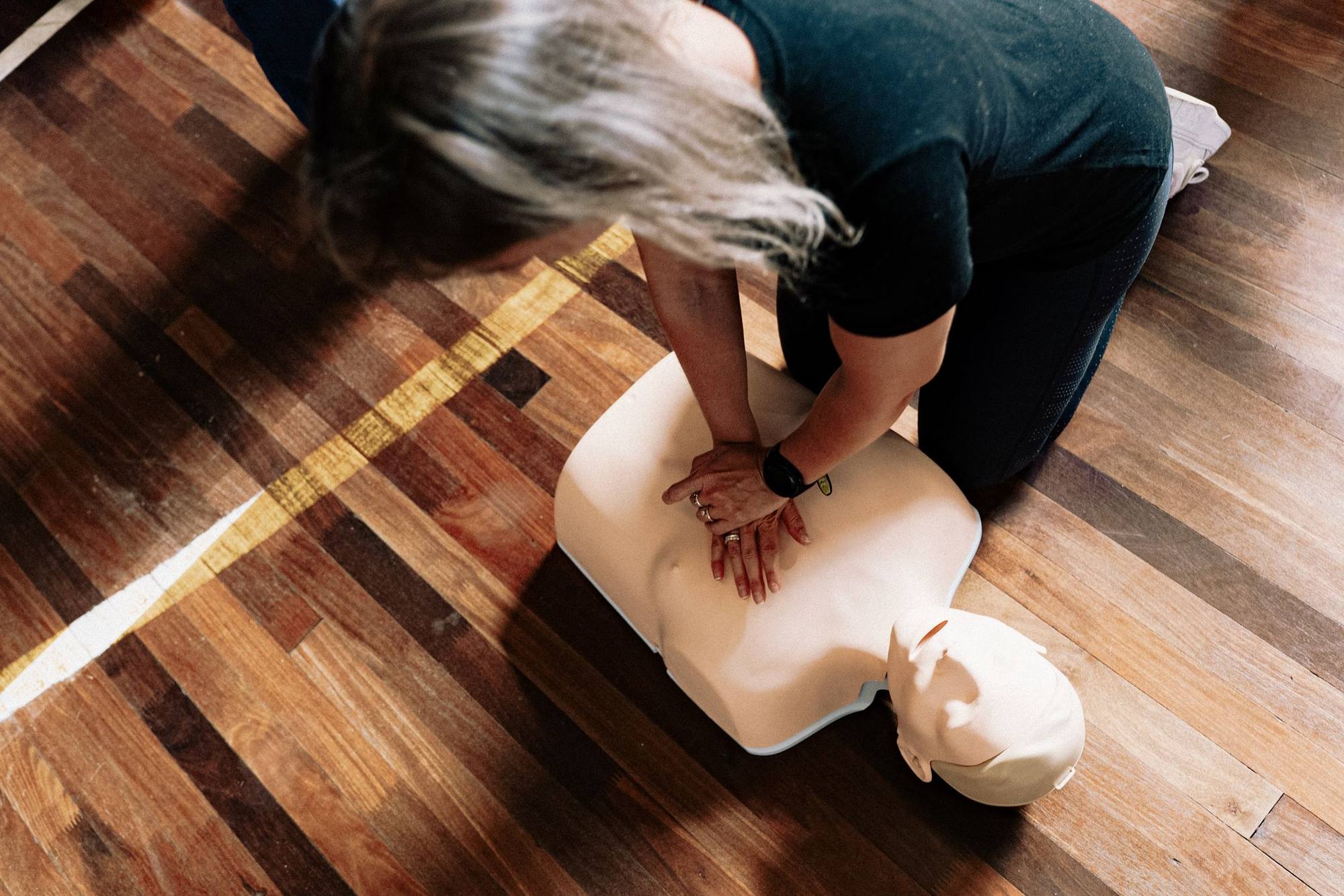
Assessing an incident, CPR, choking, bleeding and shock, and looking after a casualty until help arrives.
The full workplace first aider qualification. Covers everything in EFAW plus fractures, burns, poisoning and medical emergencies.
Revises the full First Aid at Work syllabus and renews your certificate. Book before the current one expires.
First aid for babies and children: resuscitation, choking, allergic reactions, seizures and common childhood emergencies.
A one-day course on the life-threatening emergencies most likely to affect infants and children.
A short introduction to food hygiene and the basic rules for working safely around food.
The standard qualification for food handlers. Covers hazards, safe storage and cooking temperatures, cross-contamination, cleaning and legal responsibilities.
Covers running a food safety system: HACCP principles, staff training, audits, inspections and record keeping.
The 14 major allergens, how to manage them in the kitchen and how to give customers accurate information.
Site hazards, working at height, manual handling, PPE and your responsibilities on a construction site.
The basics of staying safe at work: spotting hazards, reporting problems and knowing what to do in an emergency.
An introduction to workplace health and safety: legal duties, risk assessment, accident reporting, manual handling and fire safety.
Fire prevention, evacuation procedures, using extinguishers and the fire marshal’s role under fire safety law.
An introduction to safeguarding and child protection: types of abuse, spotting the signs, responding to a disclosure and sharing concerns.
The principles of safeguarding adults at risk in care settings, including recognising abuse and knowing how and when to report it.
Work through the official study material on British history, values, traditions and everyday life, with practice questions and test advice.
Steady progress in speaking, listening, reading and writing, using everyday topics such as appointments, shopping and school.
Vocabulary and speaking practice for applications, interviews, phone calls and meetings.
Structured speaking practice, listening strategies and timed tasks similar to a B1 test.
Vocabulary, grammar and accuracy work, with practice reading texts and writing tasks and feedback on your answers.
A full practice paper under test conditions, followed by personal feedback on what to improve.
Ask us about group or tailored training.